


.svg)
What is GI (glycaemic index)?
GI stands for glycaemic index and is a way of measuring how different carbohydrates affect blood sugar levels. The method was introduced in the early 1980s by Professor David Jenkins and colleagues as a way to help people with type 2 diabetes choose foods that lead to more stable blood sugar levels.
How quickly carbohydrates are absorbed by the body depends on their structure. When we eat carbohydrates, they are broken down into sugars and transported into the bloodstream, raising blood glucose levels. Not all carbohydrates affect blood sugar in the same way. Put simply, foods with a high GI are more “easily digested”. They pass quickly through the gastrointestinal tract and raise blood sugar rapidly, which requires a larger amount of insulin to keep blood glucose levels balanced.
Foods with a low GI have a structure that requires more processing and are broken down more slowly by the body. This leads to a slower rise in blood sugar and a lower insulin requirement to maintain stable levels.
When following the GI method, fast carbohydrates are replaced with slower carbohydrates.
How is GI measured?
To measure GI, a group of test subjects eat 50 g of carbohydrates from a specific food. Their blood sugar is then measured over the following two hours. The result is compared with a reference food, usually 50 g of glucose, which has a GI value of 100. By comparing the blood sugar response of the food with the reference, the GI value of the food can be calculated.
What is a high or low GI value?
GI ranks foods from 0 to 100 based on how much they raise blood sugar. The scale is often divided into three categories:
- Low GI: below 55
Examples: apple, beans, lentils, pasta, barley, natural yoghurt, nuts - Medium GI: 56–69
Examples: couscous, rye bread, raisins - High GI: above 70
Examples: white bread, boiled potatoes, mashed potatoes, cornflakes, jasmine rice, watermelon, dates
Only carbohydrate-rich foods significantly affect blood sugar and therefore have a glycaemic index. This is why foods such as chicken, beef or eggs do not appear on GI lists.
What affects the GI value?
How quickly carbohydrates raise blood sugar depends on several factors, including:
Structure: Foods that are soft, porous, finely ground or processed are broken down more quickly by the body than foods that require more processing, both during chewing and in the stomach. For example, a whole apple compared with apple purée, or bread with whole grains compared with white bread.
Fibre content: Soluble fibres, found in foods such as oats, fruit, beans and barley, form a gel-like substance in the gastrointestinal tract, which slows digestion.
Fat and protein: These delay gastric emptying and slow the absorption of carbohydrates.
Ripeness: As fruit ripens, its sugar content increases, which raises the GI value.
Low pH: Acidic foods, such as those containing vinegar or lemon juice, have a lower GI because acids slow gastric emptying.
Cooling: Cooling carbohydrate-rich foods such as cooked rice or potatoes changes their chemical structure. This forms so-called resistant starch, which is harder for the body to break down and therefore lowers the GI value.
How the GI method works
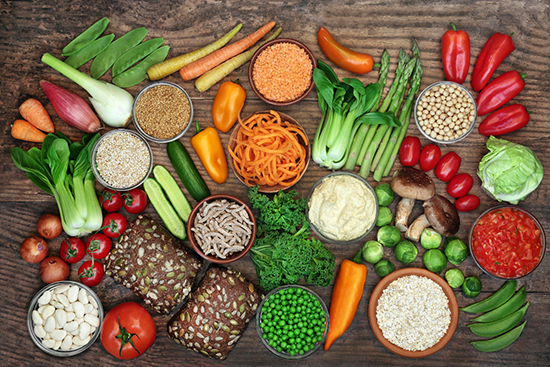
The GI method is not about eliminating carbohydrates, but about choosing carbohydrates that raise blood sugar slowly. Foods that are commonly encouraged include:
- Legumes such as beans and lentils
- Oats and wholegrain cereals
- Bread with a high proportion of whole grains or seeds, sourdough bread
- Vegetables
- Fruit and berries
- Brown rice and wholegrain rice
- Quinoa
- Wholegrain pasta, bean-based pasta
- Wheat berries and whole oats
- Natural dairy products
What should you limit?
At the same time, the intake of fast carbohydrates that cause rapid blood sugar spikes is reduced, such as:
- White bread (baguettes, white loaves)
- Sticky white rice and instant rice
- Cakes, sweets and biscuits
- Sugary breakfast cereals, cornflakes, rice crispies
- Dried fruit
- Sugary drinks such as fizzy drinks, squash and juice
- Instant pasta
- Potatoes and mashed potatoes
Glycaemic load – why the amount of carbohydrate matters
GI does not take into account how much carbohydrate you actually eat in a normal portion, which also affects blood sugar levels. For example, watermelon has a high GI value, but to consume 50 g of carbohydrates from watermelon (the amount used to calculate GI), you would need to eat around 670 g of watermelon – a very large portion.
A measure that is sometimes more useful is glycaemic load (GL). GL takes into account both how much blood sugar rises and how much carbohydrate a typical portion contains. This makes it easier to compare foods in a more practical way. For example, potatoes have a higher GI than pasta, but a lower GL, because potatoes contain fewer carbohydrates per portion. GL can therefore give a more realistic picture of how foods affect blood sugar in everyday life.
Health benefits of the GI method – what does the research say?
Choosing foods that raise blood sugar slowly is particularly important for people with diabetes or impaired glucose tolerance. Studies show that diets focusing on low GI/GL in people with diabetes lead to better blood sugar control, improved blood lipids, lower blood pressure and weight loss.
In studies of people without diabetes, results have been mixed. However, some evidence suggests that a diet focusing on low GI may offer health benefits such as increased satiety, and a reduced risk of obesity, diabetes and cardiovascular disease, although the scientific evidence is weaker.
Disadvantages of the GI method
There are pitfalls to relying solely on GI. We rarely eat foods in isolation; we eat mixed meals. The overall composition of a meal – including protein, fat and fibre – affects the blood sugar response. For example, eating high-GI sticky white rice together with a large bean salad containing vinegar will result in a lower blood sugar rise. This means GI tables are often of limited practical use.
Foods classified as low GI are not automatically healthier. GI says nothing about nutritional quality, such as vitamin, mineral or antioxidant content. Excluding nutritious and filling foods like boiled potatoes solely because they have a high GI can therefore be misleading.
The GI method for weight loss
A low-GI diet generally involves higher intakes of wholegrains, fibre-rich foods, vegetables, fruit, beans and lentils, while limiting sweets, snacks, cakes, sugary drinks, white bread and refined carbohydrates. Many people report increased satiety, more stable energy levels and reduced sugar cravings, making GI a potentially helpful approach for weight loss.
However, a lower GI does not automatically mean lower calorie intake. Some low-GI foods are low GI because of their high fat content, such as chocolate. Another example often considered “good” based on GI is peanuts. To reach 50 g of carbohydrates from peanuts, you would need to eat around 550 g (about 8 cups), which provides roughly 3,300 kcal. For weight loss, it is therefore important to consider the overall diet, nutrient intake and total energy intake – not just GI values.
The GI method and Yazen
There are generally no problems combining the GI method with medical weight-loss treatment. For many people, a GI-based approach can provide a nutritious and balanced way of eating.
At Yazen, we do not promote a specific diet. Instead, we focus on healthy eating and living based on current nutritional guidelines, while supporting individual choice and sustainable habits. Always consult your Yazen team before making major dietary changes, so they can help tailor recommendations to your individual needs.
Summary
- The GI method focuses on choosing carbohydrate sources that raise blood sugar slowly
- It may lead to improved metabolic health, particularly for people with diabetes
- GI does not consider portion size, nutritional value or energy content
- It is important to look at the overall diet, not just the GI value of individual foods
- The GI method can generally be combined with medical weight-loss treatment
Read our article series on diets.
References:
Atkinson F.S. ey al (2021). International tables of glycemic index and glycemic load values 2021: a systematic review. Am J Clin Nutr; 114(5):1625-1632.
Jenkins, D. J., et al. (1981). Glycemic index of foods: a physiological basis for carbohydrate exchange. Am J Clin Nutr; 34(3), 362-366.
Chiavaroli L et al (2021). Effect of low glycaemic index or load dietary patterns on glycaemic control and cardiometabolic risk factors in diabetes: systematic review and meta-analysis of randomised controlled trials. BMJ.
Milan Kumar Lal, Brajesh Singh, Srigopal Sharma, Madan Pal Singh, Awadhesh Kumar (2021).
Glycemic index of starchy crops and factors affecting its digestibility: A review.
Trends in Food Science & Technology.
Fleming P, Godwin M (2013). Low-glycaemic index diets in the management of blood lipids: a systematic review and meta-analysis. Fam Pract.
Jenkins, David J A et al (2021). “Glycemic Index, Glycemic Load, and Cardiovascular Disease and Mortality. The New England journal of medicine.


June 27, 2024
January 9, 2026
Start your weight loss journey with Yazen today
Everything you need to do is to create an account and answer some questions about your health
.svg)
.svg)
More articles


Low-GI foods: advantages and disadvantages
The concept of the glycaemic index (GI) was introduced by researcher David Jenkins and his colleagues more than 40 years ago as a way to describe how carbohydrates affect blood sugar. Foods with a low GI produce a slower, more even rise in blood sugar, while foods with a high GI raise blood sugar more quickly. In this article, we go through how GI works, what the research says, and the pros and cons.